Granting access to Topics after a Discussion Period ends.

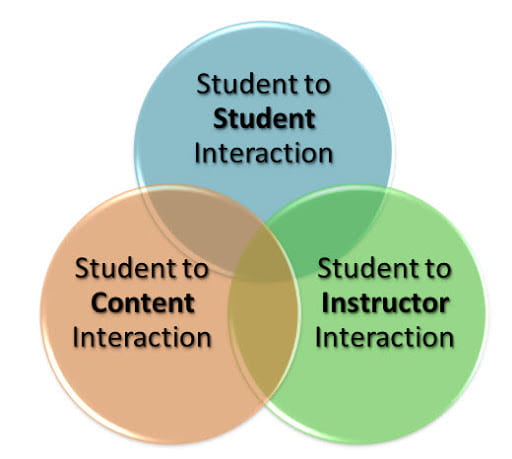
3 types of interaction explained
3 types of learner interaction

A question that I receive from time to time from instructors is how they can grant “special access” to a course discussion, after the initially assigned discussion period has ended. My response is typically a bit detailed, because I want to paint a picture for why this is not an available option in iCollege. Discussion topics are essentially a type of interaction between two or more learners. There are (3) types of interactions, as they relate to teaching and learning. One being (student-to-student). Discussion topics are a common method for meeting this objective. The goal is to mimic what would take place in a traditional classroom setting. However, in this case, we are referring to an online classroom, whereas students communicate asynchronously (not in real time) with one another on a given topic. With that said; In order for the interaction (discussion) to be meaningful, students must be engaged during the same period, with an ability to communicate by posting and replying to one another (during the estabilished discussion period). It’s like holding a class on-campus that ends at 11:00 am on Monday and having a student show up for class discussion on Wednesday at 2:00pm, after the discussion has ended and no one is there to receive and respond to their comments! To accommodate this student, you would need to re-open the classroom (discussion) for others to attend, which would be inappropriate and therefore unfair to the remaining students. For this reason, you cannot (open) nor (re-open) a discussion for an individual student. Please share any questions in the comment area, or feel free to contact me via email in order to meet for a more in-depth converstion and to explore additional options and available resources.

Keeping Students Engaged in Online Discussion

Setting the expectations early on is of great importance when it comes to student engagement. For discussions, using a rubric can be very helpful in meeting the goal of making expectations very clear to students. A benefit of using rubrics is that students get to view the rubric before completing an assignment and can gain a clear understanding of what the expectations are. One of the biggest challenges appears to be of students who have a tendancy to become laggards–those who wait until the last minute to post. This causes frustration to those who are diligent and post early but must wait for others to “engage” in the conversation. So, one of the main (criterion) that should be included in the rubric to measure engagement, should weigh heavily on how early in the week students post and reply to classmates. Reward students for posting early and often!

Another factor is to show instructional presence as much as possible through the concept of Regular and Substantive Interaction (RSI). Showing instructional presence is important, particularly with discussion. Monitoring and sharing additional context throughout the discussion activities, provides sustansive and ongoing interaction.

Be sure to use thought provoking questions that are designed to keep students engaged. Provide students with a list of the elements needed to successfully post and reply to a discussion, and reflect this information within the grading rubric.

Consider also rewarding students for posting more than is required.

This may vary by the subject matter, but for the discussion prompt, try to allow for students to share ideas and opinions based on personal insight and/experiences. This tactic could help limit one’s ability to incorporate (Ai) generated responses within their discussion posts, while further encouraging students to use their active learning and metacognitive skills.

Technology & Society: Are You an Early Adopter?

Someone once said that, “Haste makes waste”. I’m not sure that I universally subscribe to this idea, but in the world of technology integration, there’s a great deal of validity to that statement. There’s another saying that refers to Aesop’s Fable, “The Tortoise and the Hare”, whereas the most anxious and aggressive don’t always come in on top. Well with that said: Perhaps the Early Bird does get the worm, but whether it’s the best and most gratifying worm may be yet another story! These observations carry a great deal of weight with regard to how new technologies are distributed and adopted by today’s consumers.

Today we live in an environment where new product ideas are researched, designed, developed, and distributed to an international consumer base in record time. The research and development phase’s of producing new products and technologies is indeed a costly and time-sensitive endeavor. In fact the practice of developing, producing, and marketing new products to consumers is enormously expensive. Therefore the faster products are marketed and sold, the quicker companies will receive a return on their investment. Both publicly held companies (those listed on the various stock exchanges and are owned by groups of shareholders), and private entities share the challenge of creating a positive cash flow situation as fast and as efficiently as possible. Investors, including stock holders, banks, private equity and other entities, have a vested interest in the rapid diffusion of new technologies to the market. However there are sometimes inherent problems that may potentially effect quality, and the end user (consumer) can be left holding the bag. Therefore the methods with which new products and services are marketed, distributed and sold, may not always in the best interest of consumers.

In the business environment, the approach to adapting new products and technologies is extremely conservative. Businesses rely on efficiency and productivity to turn a profit. They have little time for experimentation and little patience for ironing out problems and other challenges related to organizational change. For example: When new versions of a computer operating system such as Microsoft Windows or a new mobile device such as an iPhone is introduced to the public, information technology professionals are almost paranoid toward immediate plans for any wide-spread adaptation or implementation. Business organizational networks are not social networks. They are mission critical tools for managing data and distributing other important information. A premature introduction of technologies can often prove problematic due to limited research and development, and/or a lack of proper usability testing in “real world” work environments. Therefore it is the consumer base that is often charged with experimenting and uncovering technical issues.

New technologies often fail or are unstable under certain conditions. The perception may be that consumers have a much greater threshold for dealing with problems associated with newly introduced products. For this reason, and by default, consumers who are quick to purchase the latest and greatest products as soon as they become available, often pay a premium in terms of quality and costs. As an early adopter, you may be faced with immediate updates, upgrades and performance and even security issues. Additionally and perhaps more significantly, you will almost surely pay a premium with the highest price for a given product.

Having obtained the latest and greatest new product or gadget may be self-ingratiating in terms of social status and popularity, but in the larger scheme; Ask yourself, is it really worth the extra costs associated with being an early adopter?